

Best Golf Cart Tires for Street Driving
Table of Contents
- What Makes Golf Cart Tires Street-Legal
- Radial vs Bias Ply Golf Cart Tires: Which Performs Better
- Top Street-Legal Golf Cart Tires: Quick Comparison
- How to Choose Golf Cart Tire Size for Your Cart Model
- Golf Cart Tire Pressure for Street Driving: PSI Settings
- Installation, Balancing, and Maintenance for Street Tires
- Wet Weather Performance and Tread Pattern Selection
- Frequently Asked Questions
Last Updated: October 4, 2026
What Makes Golf Cart Tires Street-Legal
Street-legal golf cart tires must meet DOT (Department of Transportation) standards. Not every golf cart tire qualifies, many are built purely for fairway or off-road use. The critical distinction comes down to tread pattern, sidewall construction, and load rating.
A DOT-approved tire carries the DOT marking on its sidewall, certifying it can handle highway speeds, wet weather, and street driving demands. Without it, your golf cart isn't street-legal.
The best golf cart tires for street driving combine durability with ride comfort, reduce road noise, improve traction on asphalt, and maintain cornering stability. Load rating must support your cart's weight plus passenger load at the recommended PSI.
Radial vs Bias Ply Golf Cart Tires: Which Performs Better
The choice between steel-belted radial and bias-ply construction fundamentally changes how your golf cart handles and feels on pavement.
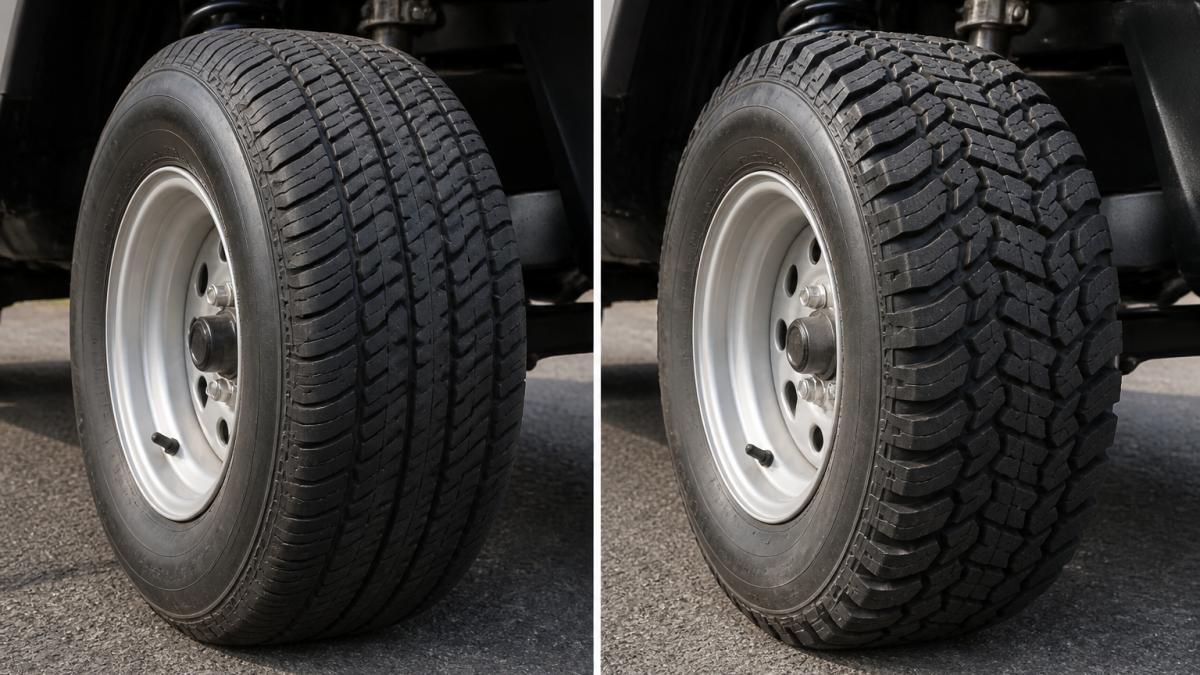
Bias-ply tires use cord layers running diagonally across the carcass. They're affordable and work for low-speed driving, but generate more heat at highway speeds, create higher rolling resistance (draining battery faster), and produce a rougher ride on asphalt.
Steel-belted radial tires have cord layers running perpendicular to travel direction with steel belt reinforcement. They deliver a smoother ride, lower noise, better battery range, and superior cornering stability. The tradeoff: higher upfront cost, but longevity justifies the investment.
For street driving, radial tires are the better choice, designed for highway performance. Budget-conscious buyers driving short distances at moderate speeds can use quality bias-ply options, but radials outperform them over time.
Top Street-Legal Golf Cart Tires: Quick Comparison
Our selection of golf cart tires for street driving balances performance, durability, and value. Each is DOT-approved and available through Golf Cart Geeks.
| Tire Model | Type | Price | Best For | Load Rating |
|---|---|---|---|---|
| GTW Fusion S/R Steel Belted | Radial | $102.99 | Highway performance, smooth ride | 18" tall |
| STEELENG Comfort Ride | Bias-Ply | $226.99 (set of 4) | Daily comfort, all-terrain use | 910 lbs @ 35 PSI |
| STEELENG Low Profile | Bias-Ply | $226.49 (set of 4) | Sporty handling, compact carts | 910 lbs @ 35 PSI |
| GTW Mamba Street | Bias-Ply | $60.99-$172.99 | Budget-conscious buyers | Varies by size |
| Kenda Load Star Street | Bias-Ply | $90.99 | Maximum load capacity | 20.8" diameter |
1. GTW Fusion S/R Steel Belted DOT Tires: Premium Radial Performance
The GTW Fusion S/R Steel Belted tire is a strong choice for highway-ready performance and durability. This radial tire with steel belt reinforcement handles speeds that stress traditional golf cart tires.

Key advantages: smooth ride quality, low road noise, and superior longevity, up to two times the durability and longevity of bias-ply tires. Cornering stability improves noticeably at higher speeds.
The 205/50-R10 size fits most standard golf carts without lift kit modifications. At $102.99 per tire, extended tread life and performance justify the cost for frequent street drivers.
2. GTW Mamba Street Tires: Affordable Bias-Ply Option
The GTW Mamba Street tire offers the lowest entry price for street-legal golf cart tires, available from $60.99 to $172.99 depending on size.
Bias-ply construction works well for moderate-speed street driving and mixed golf course use. They're durable for daily gated community use and short commutes, with adequate traction and easy installation.
Tradeoffs: more road vibration, faster battery drain, and more heat at highway speeds. Acceptable for casual drivers but problematic for high-speed use.
No lift kit is required for most Mamba sizes, which keeps installation costs down. This makes the Mamba a practical choice for budget-conscious buyers.
3. STEELENG Comfort Ride Street Tires: DOT-Rated Comfort
The STEELENG Comfort Ride delivers a smoother, quieter experience on pavement. This DOT-approved tire uses a 4-ply construction and a specialized tread pattern designed to reduce road noise and improve ride quality.
Available as a set of four for $226.99, the Comfort Ride fits standard carts without a lift kit and reaches 910 lbs load rating at 35 PSI for two-passenger setups.
The 1-year factory warranty covers manufacturing defects with free replacement, valuable protection for street-use tires facing more demanding conditions than fairway tires.
The main limitation: bias-ply construction means less longevity and highway performance than radials. But for daily community driving emphasizing comfort, it performs well.
4. STEELENG Low Profile Tires: Sporty Handling
Low-profile tires have shorter sidewalls, improving cornering stability and appearance. The STEELENG Low Profile is DOT-approved at $226.49 for a set of four.
Lower profile reduces sidewall flex for tighter handling and less body roll. Ideal for lift-kit owners wanting tires that match upgraded suspension performance.
Tradeoff: shorter sidewalls absorb less shock, so bumps feel more direct. Load rating is 760 lbs at 35 PSI.
This tire is suitable for owners who've already invested in lift kits and want tires that enhance their cart's handling and appearance.
5. Kenda Load Star Street DOT Tire: Maximum Load Capacity
If your golf cart regularly carries two passengers or cargo, the Kenda Load Star Street delivers the highest load capacity in this lineup.
At $90.99 per tire, it's affordable and DOT-approved. The 4-ply construction balances street traction with light off-road capability.
Main consideration: larger diameter may require a lift kit on some models. Check suspension geometry before ordering. Once installed, extra load capacity enables heavier use.
205/65-10 Kenda Load Star Street DOT Tire (Lift Required) →
This is a practical choice for resort operations, property managers maintaining fleet carts, and anyone who needs maximum load-carrying ability.
How to Choose Golf Cart Tire Size for Your Cart Model
Tire size determines clearance, handling, and load capacity. Wrong sizes cause rubbing, poor handling, or suspension damage.
Your cart's model and year determine correct tire size. A 10-inch wheel takes 205/50-10 or 205/65-10; a 12-inch wheel takes 215/35-12 or 215/40-12; 14-inch wheels take 225/30-14.
Check your cart's door jamb or owner's manual for OEM tire size. Measure wheel wells before upgrading. Low-profile tires fit tight spaces and suit lift kits.
Load rating matters. Add your cart's curb weight plus passenger weight, then ensure your tire's load rating exceeds that total. The STEELENG Comfort Ride handles 910 lbs, which works for most two-passenger carts. The Kenda Load Star also reaches 910 lbs, making both suitable for heavier use.
Measure twice, order once. A tire that's one size too large will rub during turns. One size too small reduces load capacity. When in doubt, contact Golf Cart Geeks, our team can help with compatibility questions for your specific cart model before you buy. ::: Accurate measuring tire size remains the most reliable way to ensure your new set fits perfectly within the wheel well without requiring any modifications.
Golf Cart Tire Pressure for Street Driving: PSI Settings
Proper tire pressure is non-negotiable for street safety and tire longevity. Most street-legal golf cart tires run at 35 PSI, but always verify the specification for your exact tire model.
Under-inflated tires increase rolling resistance, which drains your battery faster and generates excess heat. Overheated tires wear prematurely and risk blowouts at highway speeds. Over-inflated tires reduce the contact patch, which decreases traction and makes the ride harsh.
Check tire pressure monthly using an accurate pressure gauge. Temperature affects pressure, cold weather reduces PSI, warm weather increases it. A tire that reads 35 PSI on a cool morning might reach 37 PSI after a day of driving in the sun. This is normal, but if it exceeds the maximum by more than 2 PSI, let air out.
The sidewall of every tire displays the maximum safe pressure. Never exceed this limit. For street driving, running at the manufacturer's recommended PSI (typically 35 PSI for golf cart tires) balances load capacity, ride comfort, and fuel efficiency.
Installation, Balancing, and Maintenance for Street Tires
Street tires require more careful installation than fairway tires because they're subjected to higher speeds and road stresses.
Proper wheel balancing is essential. An unbalanced tire causes vibration, uneven wear, and steering issues at highway speeds. After installation, consider having a professional balance your tires using a dynamic balancer.
Alignment matters too. If your cart pulls to one side or your tires wear unevenly, alignment is likely off. Street driving stresses suspension geometry more than golf course use, so alignment becomes critical.
Rotate your tires every 5,000-7,000 miles (or every 6 months for frequent drivers). Rotating extends tread life and ensures even wear. Front tires wear faster than rear tires, so swapping them periodically balances wear.
Check tread depth monthly. A tire with less than 2/32-inch of tread depth is unsafe on wet pavement and illegal in many jurisdictions. Use a penny test: insert a penny into the tread with Lincoln's head upside down. If you can see the top of his head, your tread is too shallow.
Wet Weather Performance and Tread Pattern Selection
Wet pavement is where tire quality separates the safe from the risky. A tire's tread pattern determines how water evacuates from the contact patch, this process is called hydroplaning resistance.
Street-legal golf cart tires use tread patterns designed to channel water away from the tire's center, maintaining grip on wet asphalt and concrete. Radial tires like the GTW Fusion S/R perform well here because their steel belt construction and tread design work together to resist hydroplaning.
Bias-ply tires can handle wet conditions, but they're less effective at high speeds. The Kenda Load Star and STEELENG options provide adequate wet traction for typical community speeds (under 25 mph).
Tread depth directly affects wet braking distance. A tire with 4/32-inch of tread stops 10-15 feet shorter on wet pavement than one with 2/32-inch. For street driving where you share roads with cars, this difference is critical.
Seasonal changes matter. If you live in a region with winter weather, consider storing summer tires during cold months. Cold temperatures reduce tire flexibility, which decreases grip. Winter tires or all-season options perform better below 45 degrees Fahrenheit.
Choosing the right golf cart tires for street driving can enhance how your cart handles, sounds, and performs on pavement. The GTW Fusion S/R Steel Belted radial tire is a strong recommendation for many drivers because it delivers a smooth ride, low noise, and long tread life, making it a valuable option for frequent street users.
At Golf Cart Geeks, we stock all five of these options with fast shipping and competitive pricing. The DOT tire safety standards require that any tire used on public roads meets specific performance criteria, all our street-legal options comply.
Frequently Asked Questions
Are radial tires better than bias-ply for golf carts on the street?
Radial tires like the GTW Fusion S/R Steel Belted handle highway speeds and offer superior durability with up to two times the tread life. Bias-ply tires work well for lower speeds and cost less upfront. For street driving at higher speeds, radial construction provides better cornering stability and a smoother ride with lower road noise.
What tire pressure should I use for street driving on my golf cart?
Most golf cart street tires require 35 PSI for optimal performance and load capacity. Always check your specific tire's sidewall specifications, load ratings are tied to exact pressure settings. Maintaining proper tire pressure improves rolling resistance, handling, and tread life on pavement.
Do I need a lift kit to install larger street-legal golf cart tires?
Not always. No-lift-required options like the GTW Mamba and GTW Fusion Street Tires fit standard carts without suspension modifications. Larger sizes such as the 225/30-14 GTW Mamba do require a lift kit to ensure proper wheel clearance. Always verify your cart's current clearance before ordering.
How often should you replace golf cart tires used on pavement?
Street-driven tires wear faster than off-road tires due to continuous asphalt friction and higher speeds. Premium radial tires like the GTW Fusion S/R offer extended tread life, while standard bias-ply options may need replacement sooner depending on mileage and driving habits. Regular tire pressure checks and alignment maintenance extend longevity.